

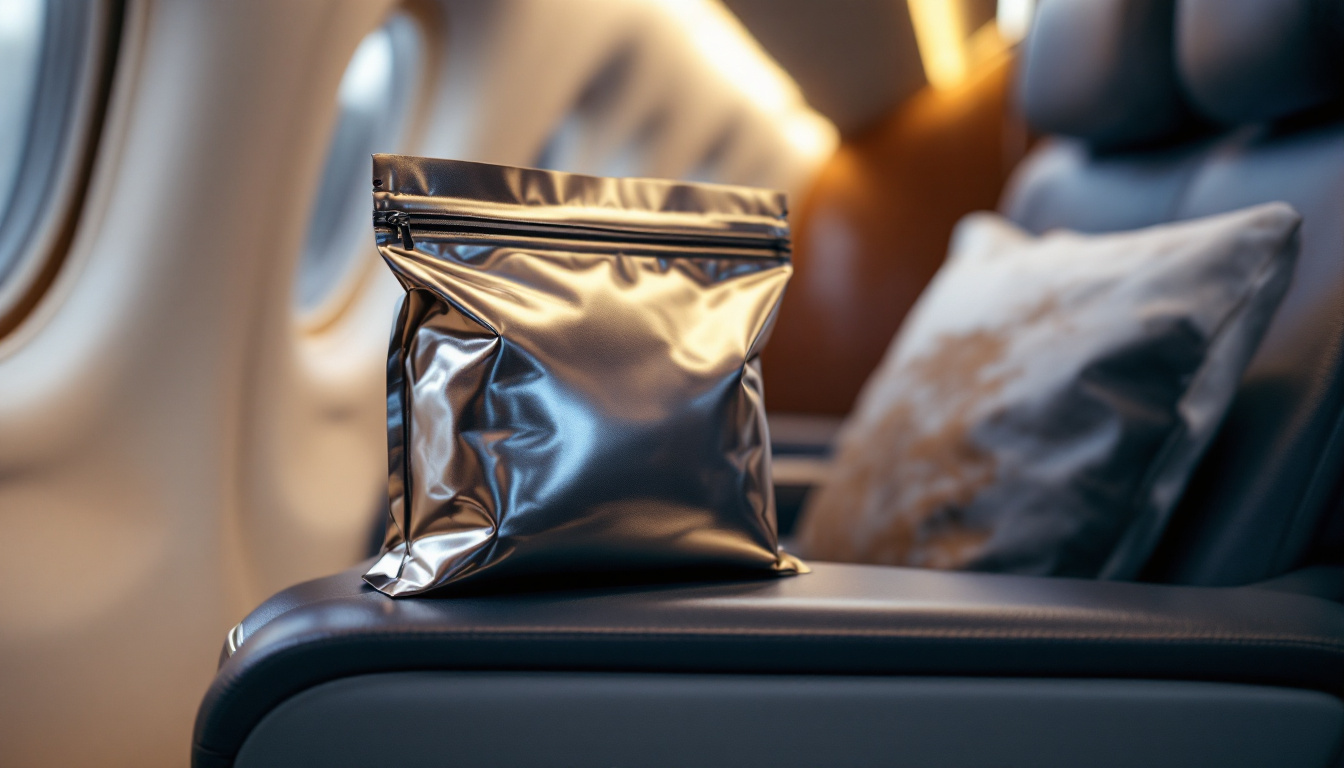
Aurélia End, the Agence France-Presse White House correspondent, was mid-flight on Air Force One Thursday evening when an aide walked through the cabin with a stack of metallic pouches. "Our phones are being taken away for now for security reasons," End reported from the pool. The phones journalists had used on the ground in Shenzhen went into signal-blocking Faraday bags — metal-lined pouches that cut all wireless transmission — and stayed sealed until the plane touched down in the United States.
Separately, White House staffers' burner phones were collected for disposal or data wiping.
The precaution came as President Trump departed China on November 20 following trilateral talks with Chinese President Xi Jinping and Russian President Vladimir Putin. NBC News chief White House correspondent Garrett Haake called the move "very unusual." The last time reporters had phones sequestered on Air Force One was during warzone trips — Iraq in 2018 and Afghanistan in 2019. This wasn't a warzone. This was a diplomatic summit with a country we're told is our "trading partner."
Fox News' Jacqui Heinrich noted that phones were not taken when Trump left Beijing back in May. That earlier trip had its own security theater — staff and journalists discarded Chinese-issued credentials, lapel pins, and burner phones before boarding — but the Faraday bags are a new escalation. Something between May and November changed the threat calculus.
New York Post reporter Emily Goodin summed up the operating rule aboard Air Force One with five words: "Nothing from China allowed on the plane."
Trump himself addressed it directly. "Well, we want to be careful, and we didn't want to have people have phones when they shouldn't have phones, so we were very careful," he told NBC's Gabe Gutierrez. No hedging. No diplomatic softening about respecting Chinese sovereignty or the bilateral relationship. Just: we were careful because we had to be.
Frank Tian Xie, a professor at the University of South Carolina's Aiken School of Business, has warned for years about the depth of Chinese electronic surveillance capabilities targeting visiting officials and journalists. The Faraday bags confirm what cybersecurity professionals have long argued — the moment your device connects to Chinese infrastructure, it's compromised. Not "at risk." Not "potentially vulnerable." Compromised.
Consider what this means practically. The White House press pool — credentialed American journalists traveling on the President's aircraft — had their personal devices treated like evidence at a crime scene. Bagged, sealed, quarantined. These are people with Secret Service clearance to be within feet of the President, and the security apparatus still considered their phones too dangerous to leave active after a few days on Chinese soil.
The same political establishment that spent years pushing deeper economic integration with Beijing, more diplomatic engagement, more cultural exchange, more student visas — that establishment now operates under the assumption that a cell phone used in Shenzhen for 48 hours is a potential intelligence weapon. Nobody on the left wants to reconcile those two positions. The "engage China" crowd never explains why engagement requires Faraday bags on the ride home.
The staffers' burner phones didn't get bagged. They got wiped or destroyed entirely. That's the tier above quarantine — that's the "this device is already dead to us" protocol. The phones journalists brought from home and left aboard Air Force One during the visit were fine. Only the ones that touched Chinese networks got sealed.
In 2018, it took a trip to a literal combat zone to justify this level of phone security. In 2026, it takes a state dinner in Shenzhen.

Comments are closed.