

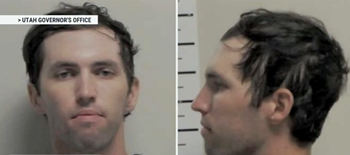
Tyler Robinson sat in a Fourth District courtroom in Provo, Utah on Friday and, when given the chance to tell his side of the story, chose to remain silent. The 22-year-old accused of murdering Turning Point USA founder Charlie Kirk last September during a public event at Utah Valley University declined to testify in his own defense at the conclusion of a week-long preliminary hearing.
The hearing, which ran from July 6 through July 10 before State District Judge Tony Graf, was a methodical dismantling. Prosecutors led by Chief Deputy Utah County Attorney Chad Grunander presented what the Kirk family later called "overwhelming evidence" that Robinson pre-planned and executed the September 10, 2025 assassination of the 31-year-old conservative speaker while he addressed roughly 3,000 students at Utah Valley University in Orem.
Grunander himself didn't mince words. "The evidence is overwhelming. It's devastating," he told the court.
The state's case reads like a checklist of premeditation. A former Utah Valley University campus police officer, Christopher Bagley, testified about what he found on a gravel rooftop near the shooting location — indentations consistent with someone lying in a prone position for an extended period. "It looks like a sniper pad," Bagley told the court, describing "markings of elbows, knees and feet."
Then there's the note. Prosecutors presented what they described as Robinson's own written confession, recovered during the investigation: "I had the opportunity to take out Charlie Kirk and I'm going to take it." Discord chat room messages from Robinson were also entered into evidence, along with a recorded interview with his roommate and former romantic partner, Lance Twiggs, who relayed that Robinson told him "he hadn't done it" — a denial that landed with all the weight of a feather against the mountain of physical evidence.
ATF forensic biologist Caitlin Oliver testified that DNA recovered from the rifle and ammunition parts was "at least 1 trillion times more likely" to belong to Robinson and one other person than to two unknown individuals. Defense attorney Richard Novak pushed back on the DNA evidence, pressing Oliver on whether the lab could definitively conclude DNA presence. "So from a scientific standpoint, you couldn't blast a headline in the media, 'Mr. Robinson's DNA found on this item'?" Novak asked. Oliver acknowledged the lab's policies don't allow claims of zero error rate.
ATF ballistics expert Samantha Karner testified that tests on the bullet fragment recovered from Kirk's body were "inconclusive" — not a match, not a mismatch. Defense attorney Michael Burt seized on this and on the possibility of third-party DNA transfer, arguing that multiple DNA sources on the rifle create reasonable doubt. "If you had a lot of DNA on your hand... your DNA could be on that trigger, right?" Burt asked Oliver. "It is possible. Yes," she replied.
Possible. That's the defense's best word right now. Not "innocent." Not "exonerated." Possible.
Robinson has still not entered a plea. He faces aggravated murder charges, and prosecutors are seeking the death penalty. His attorney's indicate he may claim some type of mental health defense.
Judge Graf will hear oral arguments on September 1 to make the final determination on whether there is sufficient evidence to send Robinson to trial. After the past week of testimony and evidence being entered into evidence that feels more like a formality.

Comments are closed.