

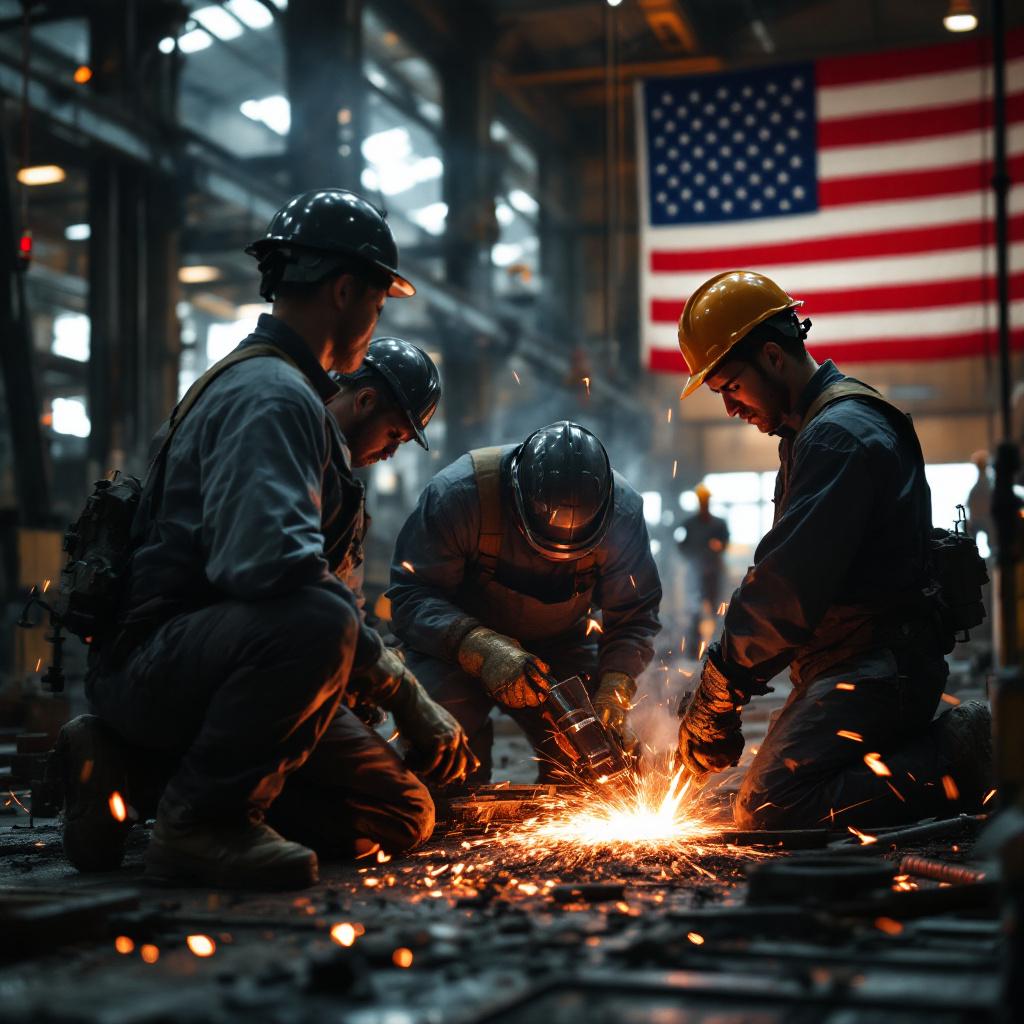
Donald Trump slapped a fresh round of tariffs on China last week, and the reaction from Wall Street and the legacy media has been more predictable than a Hallmark movie ending — tears, tantrums, and dire warnings that the sky is about to fall. What they won’t tell you is that the tariffs are already working. Manufacturing investment announcements are rolling in, trade partners are coming back to the table, and Beijing is sweating through its collar for the first time in decades.
Funny how the same “experts” who told us NAFTA would be a net win for American workers are now lecturing us about the dangers of standing up to China. How’d that last prediction work out, fellas?
For thirty years, the globalist donor class treated American manufacturing like a yard sale — everything must go, and the cheaper the labor overseas, the better the margins. They shipped our factories to Shenzhen, hollowed out entire towns across the Rust Belt, and then had the nerve to call displaced workers “unskilled” when they showed up at Trump rallies asking for their jobs back. The economists at the big think tanks and Ivy League departments served as the intellectual bodyguards for this arrangement, cranking out papers about “comparative advantage” while real Americans watched their communities rot from the inside out.
Wall Street’s panic is instructive. When the Dow dips on tariff news, CNBC rolls out the funeral music and trots out analysts who look like they just got served divorce papers. But when you zoom out — and nobody on cable news ever does — the picture tells a different story. Companies are announcing billions in new U.S. factory construction. South Korea, Japan, and even some European nations are cutting side deals to avoid the tariff hammer. And China’s export machine, the one we were told was untouchable, is showing cracks.
The establishment argument against tariffs has always been a neat little circle: tariffs raise prices, consumers pay more, the economy suffers, therefore tariffs are bad. It sounds clean on a whiteboard. But it ignores the part where a nation that can’t build its own steel, its own semiconductors, or its own pharmaceuticals is a nation that’s one supply chain disruption away from a national security crisis. We learned that the hard way during COVID when we couldn’t even make our own masks.
Trump understands something the Davos crowd never will — leverage matters more than theory. When you’re running a $300 billion trade deficit with a country that steals your intellectual property, manipulates its currency, and uses slave labor, you don’t need a PhD to know the deal stinks. You need a president willing to flip the table and demand a new one.
The media keeps calling the tariffs “chaotic” and “reckless.” That’s their favorite word for anything Trump does that actually disrupts the comfortable order. They said the same thing about pulling out of the Paris Climate Accord. They said it about moving the embassy to Jerusalem. And in every case, the world kept spinning, America’s position improved, and the pundits quietly moved on to the next manufactured crisis.
Here’s what really bothers the globalist class: tariffs are popular. Working Americans — the ones who actually build things, drive trucks, and stock shelves — understand intuitively that a country that makes nothing owns nothing. Polls show broad support for getting tough on China, even among union households that used to vote Democrat by reflex. That coalition terrifies the establishment more than any tariff schedule ever could.
The corporate donor class wants you to believe this is complicated. It isn’t. For decades, Washington let other countries rip us off because the people making the deals got rich from the arrangement. Campaign donations flowed, consulting gigs multiplied, and the revolving door between government and K Street spun like a carnival ride.
Trump kicked that door off its hinges.
The tariffs aren’t perfect. No policy is. But they represent something the ruling class hasn’t seen in a generation — an American president who negotiates like he actually works for the country instead of the donors. The tears on Wall Street and the hysterics on cable news are the surest sign he’s over the target.
Let them cry. We’ve got factories to build.

Comments are closed.