

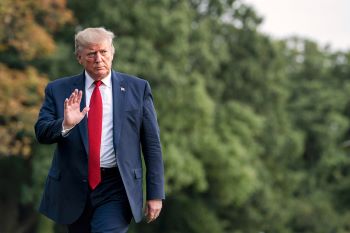
President Trump will address the nation Thursday at 9 p.m. with what the White House is calling newly declassified intelligence on foreign interference in the 2020 election. The announcement landed late yesterday with the weight of a story six years in the making — and an intelligence apparatus that's finally under new management.
The timing is not subtle. And it doesn't need to be.
The address will reportedly center on intelligence gathered under Acting Director of National Intelligence Bill Pulte, CIA Director John Ratcliffe, FBI Director Kash Patel, and Homeland Security Secretary Markwayne Mullin — a lineup that looks nothing like the crew that spent 2020 assuring everyone the election was the most secure in American history. Pulte, who also serves as Director of the Federal Housing Finance Agency, was appointed by Trump specifically to shake loose what prior leadership sat on.
The backdrop here matters. After the 2020 election, over 60 lawsuits were filed challenging the results. Election officials and cybersecurity agencies maintained there was "no evidence" that votes were deleted or changed. Courts tossed the cases. Media declared it settled. The entire institutional apparatus locked arms and said the same thing: nothing happened, move along, stop asking questions.
But questions kept getting asked. Former Director of National Intelligence Tulsi Gabbard conducted a review that identified cybersecurity gaps in election infrastructure, though the review did not provide detailed evidence tying those gaps to specific foreign actors. It was enough to keep the door cracked open — and apparently enough for the current intelligence team to walk through it.
Trump himself has not been coy about where he stands. He's said publicly that he regrets not using the National Guard to seize voting machines after 2020 and stated he would "do anything necessary" for "honest elections." Whether you find that reassuring or alarming probably depends on whether you think the last six years of stonewalling were normal.
On the legislative front, the Safeguard American Voter Eligibility Act — the SAVE Act — passed the House back in February 2026. It's been stalled in the Senate ever since, because of course it has. A federal judge also blocked key pillars of Trump's March executive order on election integrity back in June, adding another layer of institutional resistance to the pile.
The administration's critics will point out that no evidence of foreign actors successfully hacking election infrastructure was found in 2024 either, and they'll use that to argue this is all theater. That's a fair point to raise. It's also worth noting that "we didn't find evidence" and "we didn't look very hard" can produce identical sentences.
The intelligence community spent years telling us Russian Facebook ads were an existential threat to democracy. Congressional hearings were held. Special counsels were appointed. Careers were built on the premise that foreign interference was the defining crisis of the era.
Now a president says he has declassified intelligence on actual foreign interference, gathered by people he appointed specifically to find it, and we're supposed to treat it as a non-story.
Thursday at 9 p.m., the country gets to hear what's in those files. What happens after that depends on whether the Senate can muster the same urgency for the SAVE Act that it found for two impeachments.

Comments are closed.