

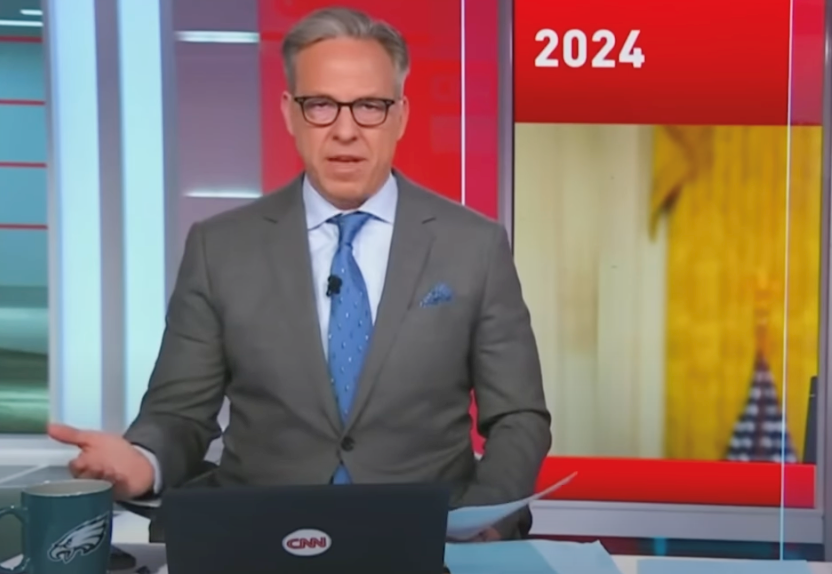
Sen. Rand Paul's office released more than 1,100 pages of Dr. Anthony Fauci's personal diaries last week — entries spanning 2019 to 2022 — and buried in there, between the pandemic memos and the bureaucratic self-congratulation, was something the press corps would rather you didn't read: detailed accounts of cozy dinners, private socializing, and what Fauci himself described as "friendship building" with the same network journalists who spent three years telling you he was an unimpeachable oracle of science.
Now those journalists are running.
The diary entries shine a light on just how intertwined Fauci's world was with the people supposedly covering him objectively. Dinners at Jake Tapper's house. Social outings with George Stephanopoulos and Chuck Todd. Text exchanges with Dana Bash.
Health and Human Services Secretary Robert F. Kennedy Jr. said he found the diaries on government servers after an eight-month search and handed them to Paul and Sen. Ron Johnson. When Fauci appeared before Paul's Senate committee on July 29, he invoked his Fifth Amendment right and declined to answer any questions. The man who spent 2020 and 2021 on every cable network in America suddenly had nothing to say.
The Wall Street Journal editorial board framed it precisely: "Journalists need sources, and friendships aren't uncommon. But the conformist media idolatry of Dr. Fauci was a way of shutting off debate over Covid policy."
That's the whole game in one sentence. It wasn't just that reporters liked Fauci personally. It's that the personal relationship created a professional arrangement where questioning Fauci became questioning "the science," and questioning "the science" got you banned from social media, fired from your job, or called a conspiracy theorist on the same networks that were hosting Fauci for dinner.
Graham draws a direct line to an earlier episode. In 2015, NBC hosted a cocktail dinner in honor of Jennifer Palmieri, Hillary Clinton's communications director. Her husband, Democrat operative Jim Lyons, was in attendance. When Wikileaks published the Democratic National Committee emails in 2016 and the cozy journalist-operative relationship was laid bare, CNN's Brian Stelter went on air and declared: "In Trump's world, journalists are really just Clinton campaign workers in disguise collaborating with her in an attempt to rig the election. This is not just false, it's ludicrous and it's damaging."
Then the emails proved it was exactly true. And then, years later, Fauci's own diaries proved the same pattern hadn't stopped — it had expanded.
The media's defense will be that source cultivation is normal journalism. And it is. A reporter buying a government official coffee to get a tip on a policy change is journalism. A reporter attending private dinners at an official's home while simultaneously presenting that official as the unquestionable authority on a policy that shut down schools, closed businesses, and separated families from dying relatives — that's something else entirely.
Fauci's diary entries noted his own bemusement at the "cult hero" status he'd achieved during the pandemic. He wasn't wrong about the cult part. The network anchors who built the altar spent years demanding the rest of us kneel at it. Anyone who didn't — anyone who asked about lab leaks, school closures, or gain-of-function research — was a heretic.
Now the diaries are public. The hearing transcripts are on the record. And the same reporters who called skeptics dangerous are quietly deleting old tweets and hoping nobody checks the archives.
The archives are fine. It's the credibility that's gone.

Comments are closed.