

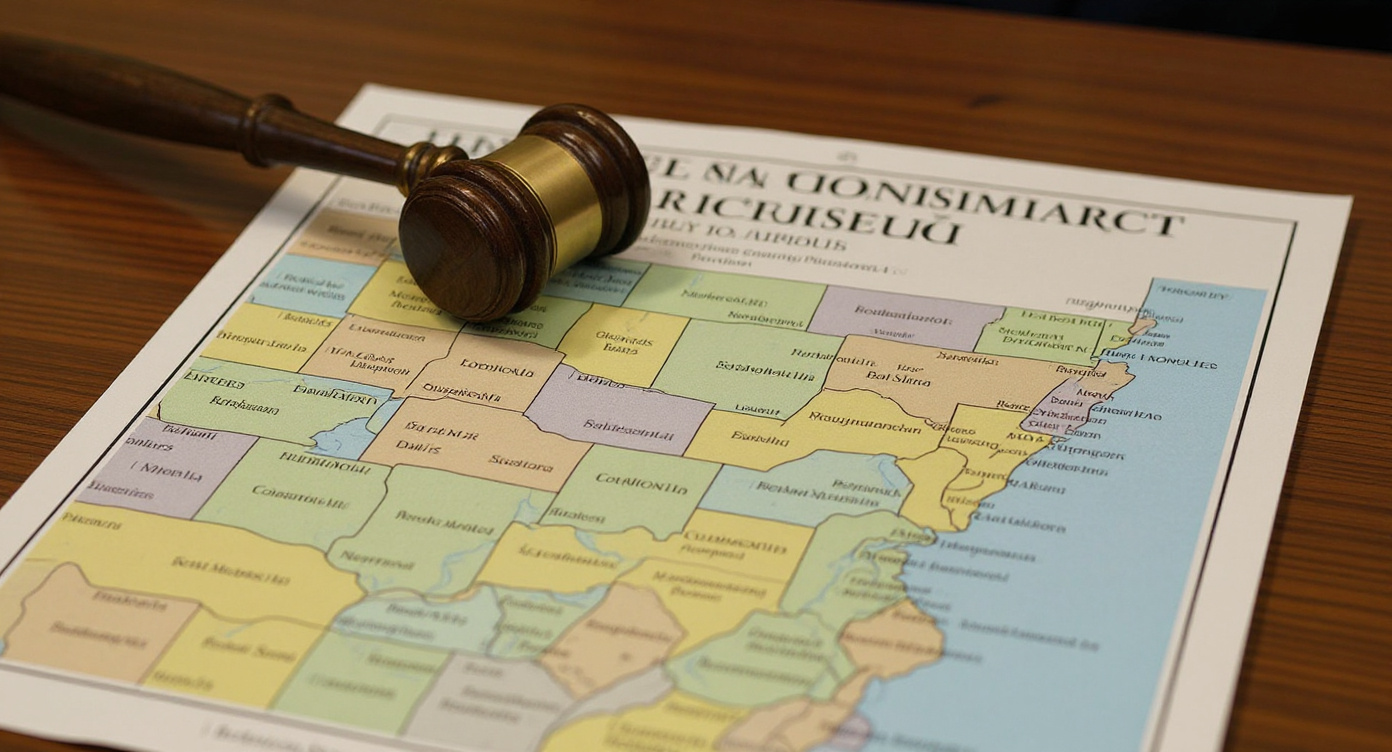
Democrats thought they had Missouri locked up.
On September 3rd, the Missouri Supreme Court ruled unanimously that the state's new congressional map — drawn by a Republican legislature to flip a Democratic seat — had to go before voters in a November referendum before it could take effect. President Trump called it "a Dark Day for 'Justice' in Missouri." Democrats celebrated. Three days later, the federal courts had a different answer.
On Monday, an 8th Circuit Court of Appeals panel — three Republican-appointed judges — ruled that using the old map is unconstitutional. The ruling went further than validating the new map: it declared that reverting to the 2022 map for the November general election violates the Constitution and federal law. "Missouri's current plan to use the 2022 map in the November 2026 general election violates the Constitution," the court wrote. "Only use of the 2025 map complies with the Constitution and federal law."
Here's why every conservative following the House majority fight needs to understand this.
Missouri's Republican-controlled legislature passed a new congressional map last year — HB 1 — that redraws the Kansas City-based district currently held by Democratic Rep. Emanuel Cleaver into a Republican-leaning seat. Democrats organized a referendum campaign through a liberal advocacy group called People Not Politicians and sued to block the new map. The Missouri Supreme Court gave them what looked like a win: voters would get to decide the map before it could take effect, putting Cleaver's seat back under the old, Democrat-friendly boundaries.
The problem the 8th Circuit identified is that the primary already happened under the new map. In August, Missouri voters in the newly drawn Fifth Congressional District went to the polls and chose their party nominees. Democrats now want to switch back to the 2022 map for the general election in November — which means more than half those voters would suddenly find themselves in completely different districts. The court ran the numbers: 57% of people living in the Fifth District under the new map would be in other districts under the old one.
"A majority of residents in the Fifth Congressional District had no voice in who will appear on their November 2026 ballot," the court wrote. "They will be forced to choose from nominees selected by a minority of residents in the district as well as voters who are no longer in the district."
That's an Elections Clause violation and an Equal Protection violation in one ruling — and three Republican-appointed federal judges found it airtight. Trump-appointed District Judge Stephen Clark had already blocked Missouri from using the old map. The Supreme Court paused that order. The 8th Circuit just put it back in force.
Democrats are heading back to the Supreme Court. People Not Politicians executive director Richard von Glahn announced an emergency appeal immediately after the ruling. The 8th Circuit gave SCOTUS until Monday at 5 p.m. to intervene. If the high court stays out, Missouri election authorities have been directed to begin implementing the 2025 map immediately.
The House majority going into November is narrow. Democrats need a net gain of seats to flip it. Republicans need to hold what they have — and expand where they can. A redrawn Missouri seat that flips from Democratic-leaning to Republican-leaning is exactly the kind of pick-up that makes a narrow majority harder to dislodge. Republicans who brought the federal lawsuit — including Rep. Robert Onder and congressional candidate Richard Brattin — argued that switching maps between the primary and the general would disenfranchise their voters. The 8th Circuit agreed.
Democrats spent months litigating to preserve a map that protected Cleaver's seat. A federal appeals court just ruled that map is the unconstitutional option. The Missouri Supreme Court thought it had the final word. It didn't. The Supreme Court has until Monday to weigh in. Until then, the 2025 map stands.

Comments are closed.