

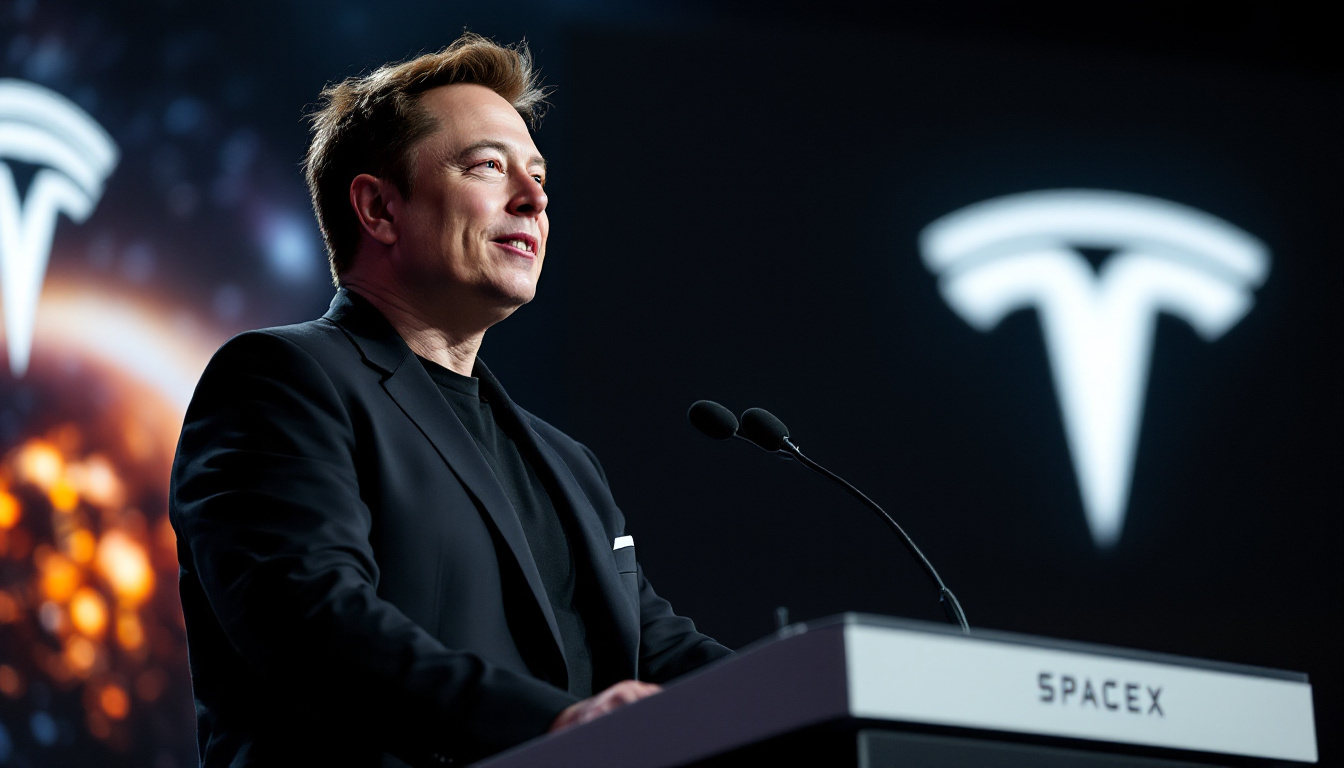
SpaceX just posted its first profitable quarter as a public company — $4.4 billion in net income on $14.6 billion in revenue — and before Wall Street could finish updating its spreadsheets, Elon Musk dropped a bomb on the earnings call that made the numbers almost secondary. Both SpaceX and Tesla, he revealed, have formed special committees of independent directors to explore merging the two companies into a single entity.
That would be the largest corporate merger in history. By a lot.
The Q3 2026 earnings report, released October 20, showed SpaceX revenue up 161% year-over-year from $5.6 billion. Income from operations hit $2.8 billion, compared to a loss of $273 million during the same quarter last year. Adjusted EBITDA came in at $8.8 billion — a 306% jump. The stock, trading under the ticker SPCX on the Nasdaq, surged more than 8% the following morning, pushing the company's market cap past $2.01 trillion.
The revenue breakdown tells the real story. SpaceX's Super Intelligence compute division — the AI arm nobody was talking about two years ago — generated $7.6 billion in quarterly revenue, up from $813 million a year earlier. That's ninefold growth. Starlink connectivity brought in $5.2 billion, with consumer subscribers climbing to 13.6 million and average revenue per user ticking up to $69. The launch business, the part most people still think of when they hear "SpaceX," contributed $1.8 billion.
So the rocket company is now primarily an AI company that also runs the world's largest satellite internet network and launches things into orbit on the side.
Then came the merger question. Musk, who clearly understood he was navigating a securities minefield with cameras rolling, chose his words with uncharacteristic care — and still managed to say exactly what he meant.
"This is definitely kind of a question where I feel like I'm tap dancing through a minefield," Musk said on the call. Then, without much of a pause: "But I do think there's a lot of merit to combining the companies."
Asked directly whether a merger would be a good idea, he didn't hedge. "Do I think it would be a good idea? Yes."
Because Musk sits atop both companies, securities regulations required the special committees to be composed entirely of independent directors. On the Tesla side, that includes board chair Robyn Denholm, former CTO JB Straubel, and James Murdoch, among others. SpaceX's committee draws from its six independent directors, including Roelof Botha and Ira Ehrenpreis, who sits on both boards.
No agreement has been reached. No timeline was given. The committees are studying the idea, and any deal would need approval from both sets of shareholders. But the machinery is now in motion, and the man who controls both companies just told a live earnings audience he thinks it should happen.
The scale is worth pausing on. SpaceX IPO'd on June 12, 2026, raising $85.7 billion at a valuation of $1.77 trillion — the largest U.S. IPO since Alibaba. Tesla's market cap sits north of $1.2 trillion. A combined company would dwarf every corporate entity on the planet. And Musk told analysts he expects SpaceX alone to hit annual recurring revenue between $500 billion and $1 trillion by the end of 2027.
Meanwhile, the operational side keeps accelerating. Musk touted Starship Flight 14 — launched September 28 — as a major milestone and confirmed that Flight 15, targeted for no earlier than November 8, will attempt to catch both the Starship upper stage and the Super Heavy booster simultaneously. No orbital-class vehicle has ever been fully recovered after a single mission. Musk said success is "more likely than not." He also confirmed volume production of SpaceX-designed AI chips, developed in partnership with Tesla and Intel, is targeted for Q3 2028 at the planned Terafab factory in Texas.
Three years ago, Musk was the guy half of Washington wanted investigated, deplatformed, and regulated into submission for having the audacity to buy Twitter and back a Republican president. Advertisers boycotted. Senate Democrats demanded hearings. Legacy media ran twelve-part series questioning whether one man should have this much influence.
He responded by building a $2 trillion company, posting a $4.4 billion quarterly profit, and publicly floating a merger that would create the most valuable corporation in human history — on an earnings call, between discussing his satellite internet network's 13.6 million subscribers and his plan to catch a spaceship with a giant metal tower.
The Terafab breaks ground next year. The merger committees are meeting. Starship 15 has a date.
Elon Musk told Wall Street he's tap dancing through a minefield. The stock went up 8%.

Comments are closed.