

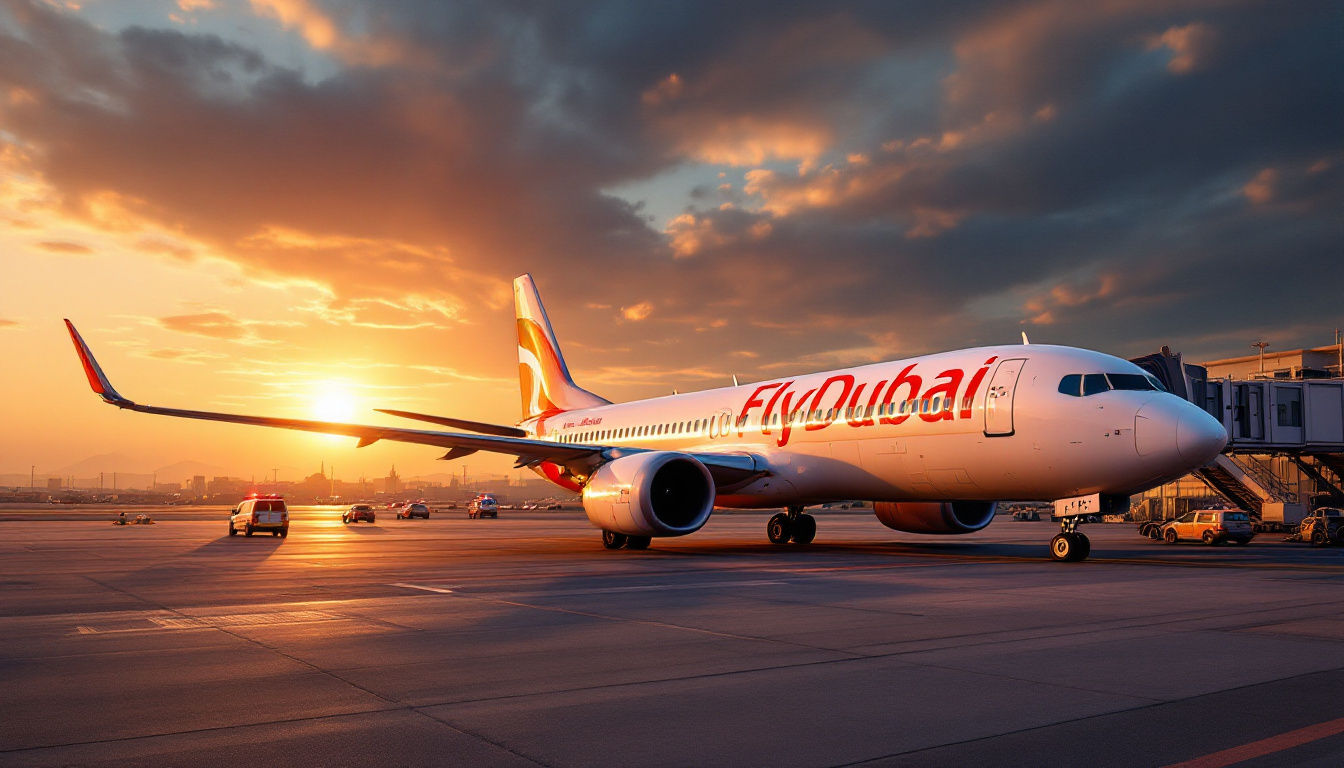
Captain Smit Machchhar was lying on the cockpit floor of FlyDubai Flight FZ1073, bleeding to death from multiple stab wounds, when he felt the Boeing 737-8 MAX start to dive. The plane was carrying 174 people — 166 of them Israeli — on a routine flight from Dubai to Tel Aviv. It had just dropped 16,000 feet in a matter of seconds because the man in the other seat, his own co-pilot, had plans to crash the plane 9/11 style and kill everyone on board.
Machchhar, with the last bit of energy he had in him before he passed out, crawled to the cockpit door and opened it to get helpl.
"I was fighting for my life. I had suffered so many wounds that I had fallen down," the 17-year veteran pilot told Indian Prime Minister Narendra Modi from his hospital bed on Friday. "But when I was lying down there, I could hear that the aircraft was going down. I knew absolutely that this was one last push, if Smit could do it."
So he did it. While the attacker was still stabbing him, Machchhar managed to unlatch the cockpit door. What came through it were four Israeli passengers who subdued the co-pilot, wounded him, and tied him up. The plane, which had transmitted both squawk code 7700 — general emergency — and 7500, the international signal for unlawful interference, made an emergency landing at the airport in Tabuk, Saudi Arabia.
Every single person on that flight walked off alive.
The attacker is an Omani national whose name has not been publicly released. Israeli Prime Minister Benjamin Netanyahu said the co-pilot "underwent Islamist radical indoctrination." That's the polite diplomatic phrasing for a man who boarded a commercial aircraft with a knife and attempted to nose-dive a plane full of civilians into the ground.
The security questions here are obvious and enormous. How does a radicalized pilot pass whatever screening FlyDubai uses? How does a knife make it into a cockpit? These aren't rhetorical questions — 174 people nearly died because someone, somewhere in the vetting chain, didn't catch a man whose ideology told him crashing a plane full of Israelis was a righteous act. Netanyahu called Machchhar "a true hero" and noted that "despite being stabbed and seriously injured, he fought back, resisted, opened the cockpit door and enabled passengers and crew to overpower the attacker."
PM Modi went further. He said Machchhar had "shown the world the highest form of courage" and "prevented another 9/11-like attack from happening." That comparison is not casual. A radicalized pilot deliberately crashing a commercial jet is the nightmare scenario aviation security was rebuilt around after September 11, 2001. Twenty-five years of reinforced cockpit doors, air marshals, and screening protocols — and the threat walked in through the crew entrance.
Passenger Miriam Abu Kasis told her mother, Yasmin Abu Kasis, that "there was blood everywhere" inside the aircraft. The passengers spent approximately six hours on the ground in Tabuk before a rescue flight returned them to Ben-Gurion Airport the evening of September 30. An Israeli official described the outcome as a "major disaster avoided," which might be the understatement of the decade.
Machchhar, a Mumbai native with nearly 10,000 flight hours, spent a decade at SpiceJet before joining FlyDubai in 2022. He told Modi he drew strength from his Hindu faith while bleeding on the cabin floor. He wasn't thinking about protocols or procedures. He was thinking about the 174 people behind that cockpit door who needed someone to open it.
There were four Israeli passengers who rushed in and took down the co-pilot mid-flight. In the split second between Captain Machchhar popping that latch and the plane leveling out, those four people made the same calculation that the passengers of United Flight 93 made on September 11: the cockpit is the target, and we're the only ones who can reach it.

Comments are closed.