

A city of 24,000 people is down to fewer than 2,000. Oleshky, a southern Ukrainian town across the Dnipro River from Kherson, has been under Russian occupation since the early days of the war, and ninety percent of its territory was flooded after the Kakhovka Dam was destroyed in 2023. The residents who stayed are elderly, immobile, and trapped between two armies that can't agree on anything.
Except, apparently, when Melania Trump picks up the phone.
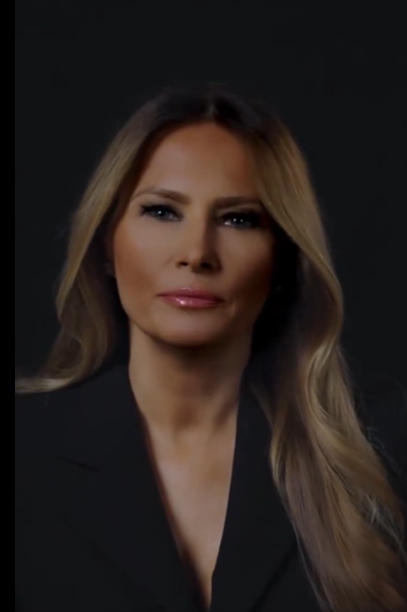
The First Lady announced this week that she brokered a ceasefire agreement between Russia and Ukraine, effective October 29, to deliver humanitarian aid into Oleshky and evacuate civilians who want out. Both sides agreed. No State Department task force. No UN resolution. No blue-ribbon commission that meets for six months and produces a PDF nobody reads.
Melania Trump's office has reportedly been quietly building a direct communication channel with both Moscow and Kyiv through six previous operations that reunified 34 children separated by the conflict. That quiet track record is what made this possible. "My representative and I immediately leveraged the communication channel we established with Russia and Ukraine through the previous six reunifications of 34 children," she said in a statement.
The details of the ceasefire are specific. Non-military, civilian leaders from both countries will visit Oleshky residents in their homes and assess what they need. Those who want to leave will receive coordinated transportation to wherever they choose. "I anticipate some will want to go to Russia, and some to Ukraine," Mrs. Trump said. The arrangement doesn't pick sides. It picks people.
Oleshky's situation demanded it. The city's population has collapsed from 24,000 to an estimated 1,700 to 2,000, with roughly 50 children still among them. "The situation in Oleshky is dire," the First Lady said. "Oleshky is a front-line war city on the brink of disaster." She added what everyone involved already knew: "It was abundantly clear that without my intervention, the possibility to bring humanitarian aid into the city and to evacuate the elderly would be impossible."
That's not self-congratulation. That's a status report. The diplomatic machinery that's supposed to handle this — the agencies, the envoys, the international bodies with acronyms longer than their attention spans — hadn't gotten it done. A First Lady with a direct line and a track record of results did.
President Trump was asked whether his wife should serve as an official envoy. "No, but it's not the worst idea I've ever heard," he said. "What she wants to do is save children. And that's her focus. And both sides are cooperating with her. So, doing a very good job."
Both sides cooperating with her. That sentence carries more weight than it looks. Russia and Ukraine have spent years unable to agree on prisoner exchanges without months of back-channel negotiation. Melania Trump has now gotten both governments to agree to a ceasefire, a humanitarian corridor, and a civilian evacuation framework — built on trust she earned one reunification at a time, 34 children over six operations.
The October 29 ceasefire covers a city most Americans have never heard of, in a war most of Washington treats as a talking point rather than a problem to solve. Somewhere between 1,700 and 2,000 people are waiting to find out if the agreement holds.
Six operations. Thirty-four children. One ceasefire. No committee.

Comments are closed.