

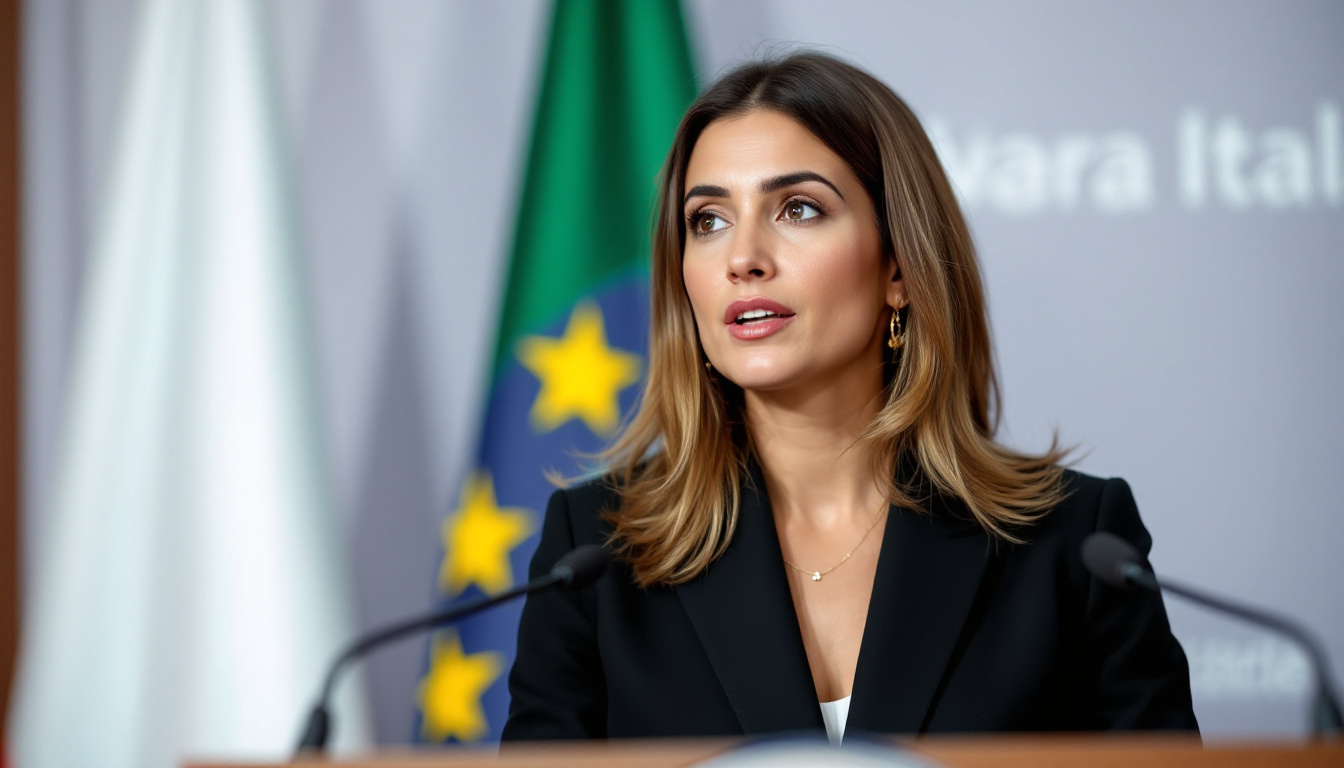
931,323 foreign students now sit in Italian classrooms. That's 11.6 percent of total enrollment. In Lombardy, foreign pupils make up more than 25 percent. In some primary schools, Italian kids are the minority in their own country's schools.
Italian Prime Minister Giorgia Meloni just said that's over.
At the Fenix festival on September 20th — an event hosted by the Gioventù Nazionale youth movement of her Brothers of Italy party — Meloni announced a legislative package that would ban burqas and niqabs in schools, establish a legal cap on foreign students per classroom, and require parents of students with integration difficulties to learn Italian.
"It cannot happen that in an Italian classroom, Italian children are the ones who feel pushed into a corner because they have become the minority," Meloni told the crowd. She wasn't reading from a teleprompter. She wasn't hedging. She was stating what every Italian parent already knew.
Italy already had a 30 percent cap on non-citizen students per class — a 2010 ministerial circular issued under former Education Minister Mariastella Gelmini. It was largely unenforced. Meloni's proposal replaces a suggestion with a statute.
On the veil ban, Meloni was equally direct. "At school, one goes with one's face uncovered," she said. "Equality between men and women is not negotiable. Not in our streets, not in our schools." The ban applies specifically to burqas and niqabs — full face coverings. Hijabs are not affected. The distinction matters because it makes the constitutional challenge harder. This isn't about religion. It's about gender equality in a learning environment.
Italy isn't exactly breaking new ground in Europe. France banned face coverings nationwide in April 2011. Belgium followed in July 2011. Bulgaria, Denmark, the Netherlands, and Switzerland all have some form of the prohibition in place. Portugal passed its own ban just last month. The difference is that Meloni is pairing the veil ban with an enforceable student cap and a language mandate for parents — a comprehensive package, not a symbolic gesture.
The opposition responded on cue. Angelo Bonelli, an MP from the Green and Left Alliance, accused Meloni of "chasing the neo-fascist right of AfD" and complained that Italian teachers' salaries are among the lowest in Europe. A constitutional law professor named Salvatore Curreri warned the cap could "infringe a right recognised by the constitution" if it uprooted families.
Bonelli's pivot from school demographics to teacher pay tells you everything about the strength of the counter-argument. When the rebuttal is "but what about salaries," the policy itself is standing on solid ground. As for Curreri's constitutional concerns — Article 34 of the Italian Constitution says "school is open to everyone." It doesn't say every classroom must accept unlimited enrollment regardless of the effect on existing students.
The numbers behind the policy are harder to argue with. As of January 2025, Italy has 5.898 million foreign residents. Approximately 1.7 million are Muslim — 31 percent of the foreign population. In the 2024-25 school year, foreign students made up 13.7 percent of primary school enrollment nationally. These aren't projections. These are current figures driving a policy response.
"Calling all this integration is yet another lie," Meloni said, "a convenient lie for those who live off ideology, for those who preach to us from their living rooms and then send their own children to schools where this problem does not exist."
The League — Meloni's coalition partner — has already proposed an amendment adding criminal penalties: one to two years in prison and fines between €10,000 and €30,000 for violations. Whether that survives parliament is another question. That it was proposed at all tells you which direction Italy's political window is moving.
The policy package lands while the rest of Europe is still debating whether to call the problem a problem.

Comments are closed.