

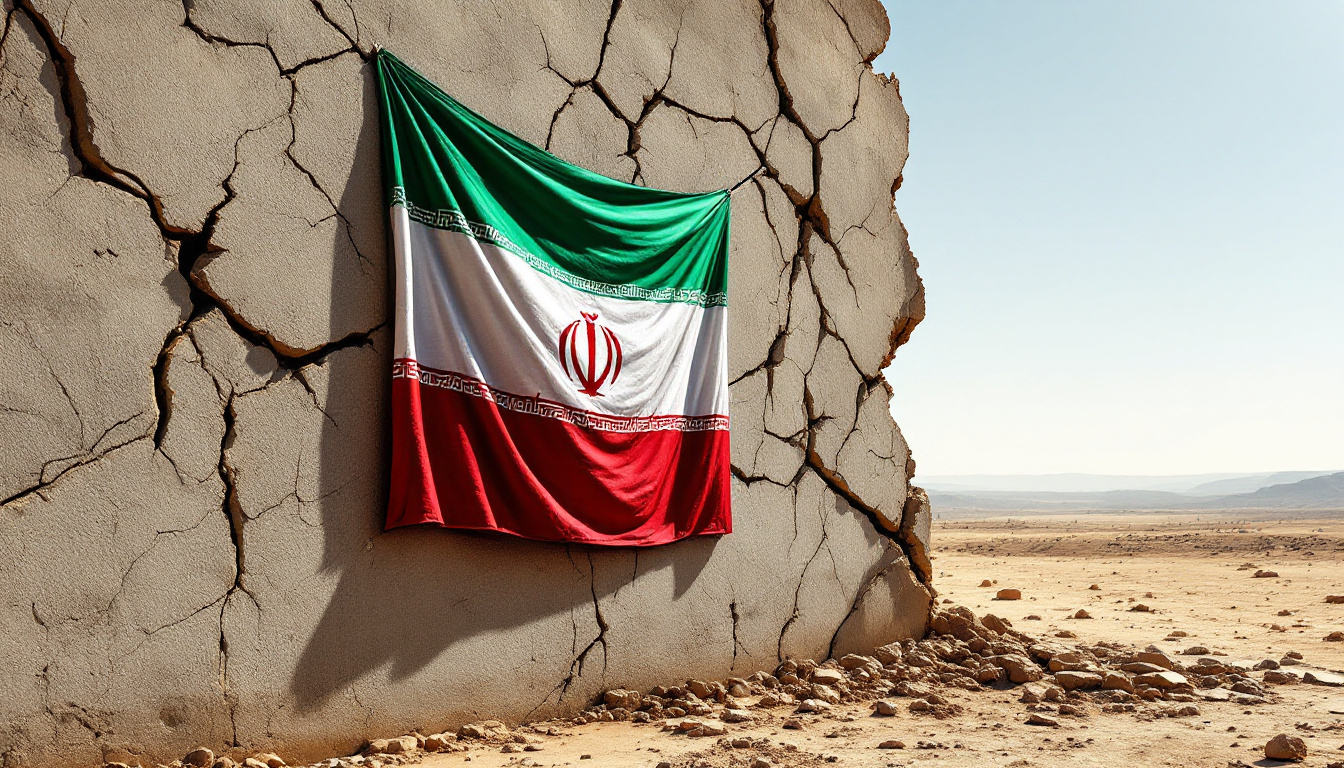
Iranian President Masoud Pezeshkian stood up this week and told his own country's IRGC leaders, the hard-liners who are really in charge of the country, that the war with the United States needs to end. Not because Iran has been defeated militarily, mind you. Because the economy is in freefall and the regime can't keep the lights on.
His exact words: "The war must come to an end at some point. It is better that we demonstrate our strength and dignity today and tell the world that we have won and that we are ending the war."
He's not proposing a ceasefire. He's proposing a face-saving retreat dressed up in the language of victory. "Tell the world that we have won" — while asking to stop fighting. That's what a country sounds like when it's looking for the exit and can't find one fast enough.
Pezeshkian isn't alone. Parliamentary Speaker Mohammad Bagher Ghalibaf went even further, as reported by the Wall Street Journal, making the case that military power means nothing if the Iranian people are starving. "No matter how much military power we have, if our people are struggling and the country lacks financial circulation and economic growth, we will not achieve progress," Ghalibaf said. "As someone who has experienced war, we understand the true value of peace."
Two of the most powerful figures in the Iranian government, publicly pleading with their own hardliners to stand down. Not in a back channel. Not through intermediaries. On the record, where everyone can hear them.
Mark Dubowitz, CEO of the Foundation for Defense of Democracies, laid out why this is happening now. "The U.S. military is winning the Battle of Hormuz," Dubowitz said. "As we've argued for months, the regime played its strongest card at its weakest moment — instead of waiting for Ali Khamenei's vision of a massive missile shield, nuclear weapons, a potent terror-proxy network, and permanent control over Hormuz."
The contrast here is almost too clean. Under Biden, the policy toward Iran involved pallets of cash, unfrozen assets, and a general atmosphere of "please like us." The regime pocketed the money, funded proxies, and kept enriching uranium. Under Trump, maximum pressure resumed, sanctions tightened, and the military posture at Hormuz made clear that provocations would be met with consequences, not strongly worded letters.
One approach got us Iranian drones over the Middle East. The other got us Iranian officials begging their own government to wave the white flag and pretend it's a victory banner.
Left-wing foreign policy voices will call this "destabilizing" or "reckless escalation." Which is an interesting way to describe a situation where Iran's own president is publicly asking to end hostilities. Usually when your adversary is requesting off-ramps, that's the opposite of escalation. That's called winning.
The pattern is familiar. Strength produces negotiation. Weakness produces aggression. Every time the United States projects genuine resolve — economic, military, diplomatic — adversaries recalculate. Every time we project accommodation, they expand.
Iran's leaders aren't having this conversation because they woke up feeling diplomatic. They're having it because their economy is collapsing, their strongest military card already got played, and the pressure isn't letting up.
When a regime has to tell its own hardliners to declare victory and go home, the only question left is how long the hardliners take to listen.

Comments are closed.