

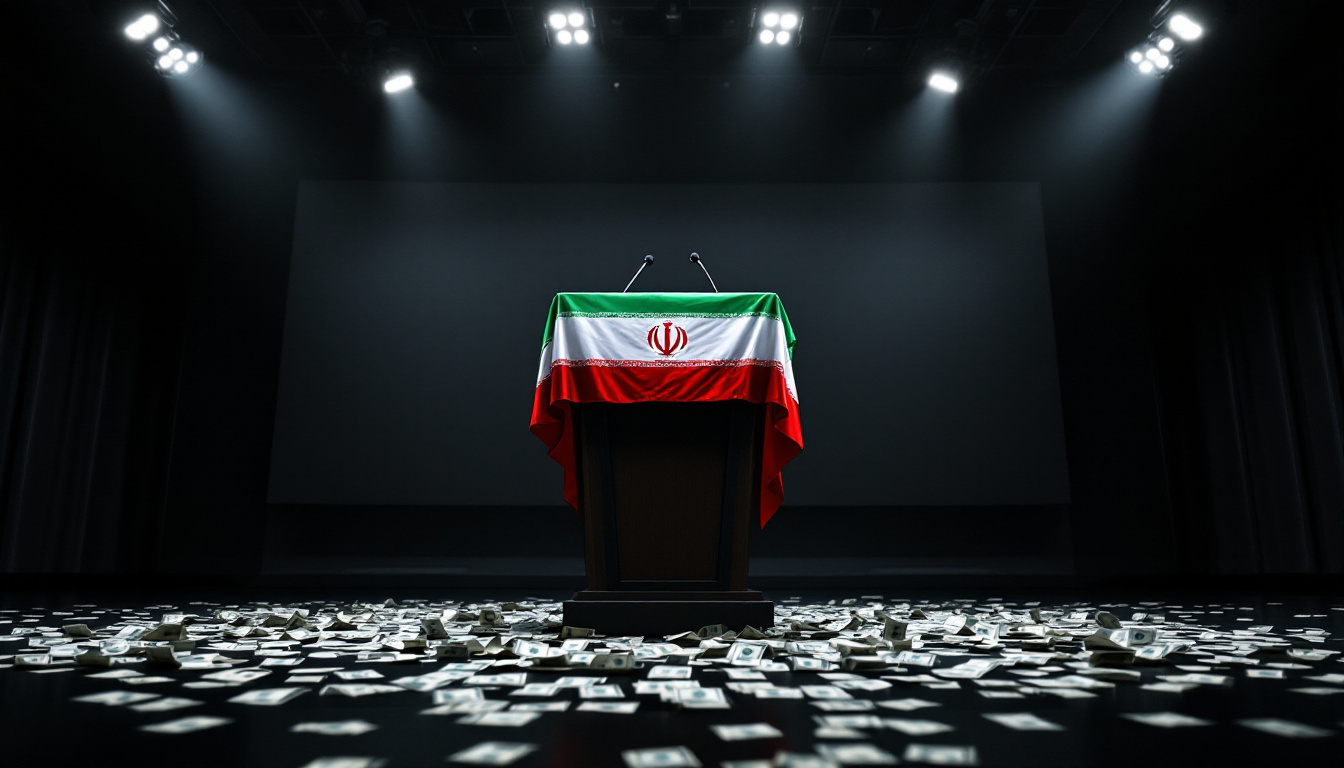
Thirty thousand dollars. That's the bounty Iran's Army chief Amir Hatami just announced for any Iranian citizen who kills or captures an American soldier. Per Iran's own Islamic Republic News Agency, posted openly on X for the world to see.
Hatami's exact words: "Anyone who kills or captures and hands over an invading American military personnel will receive a reward equivalent to $30,000 or 5 billion tomans from the Islamic Republic of Iran's Army."
He wasn't finished. "Courageous Iranian women who carry out such an action will receive double the reward." That's $60,000 — or 10 billion tomans — for women. Iran, a regime that arrests women for showing their hair, suddenly discovers gender equality when it involves killing Americans.
For context on the currency: one toman equals 10,000 Iranian rials. The regime chose to announce the bounty in both dollars and tomans, which tells you who the intended audience is. This wasn't just a domestic morale play. This was a message directed outward — at the region, at militias, at anyone within range of an American uniform.
The backdrop matters. U.S. and Israeli military operations against Iran have escalated over preceding months. The tension has been building publicly. But there's a canyon-sized difference between a nation engaged in military conflict and a nation putting cash bounties on individual service members. One is war. The other is a government-sponsored hit list.
There are no known U.S. ground forces currently deployed inside Iran, with the exception of an April rescue mission for a downed pilot. Which makes the bounty announcement less about an imminent tactical threat and more about a strategic signal: Iran wants the world to know that every American in uniform, anywhere in the region, has a price on their head.
This is also the same regime that has funded, armed, and directed proxy attacks on American forces across Iraq and Syria for years. Hezbollah, the Houthis, Iraqi militias — Tehran's fingerprints are on every rocket and drone that's been aimed at U.S. positions in the Middle East. The bounty isn't a departure from that pattern. It's the pattern without the mask.
The question that should be dominating every cable news segment and every congressional hearing this week is straightforward: what is the official United States response when a foreign government openly solicits the murder of American troops for money?
Thirty thousand dollars for an American life. Sixty thousand if a woman does it. Published on X like a product listing.
That's not a negotiating position. That's a declaration.

Comments are closed.