

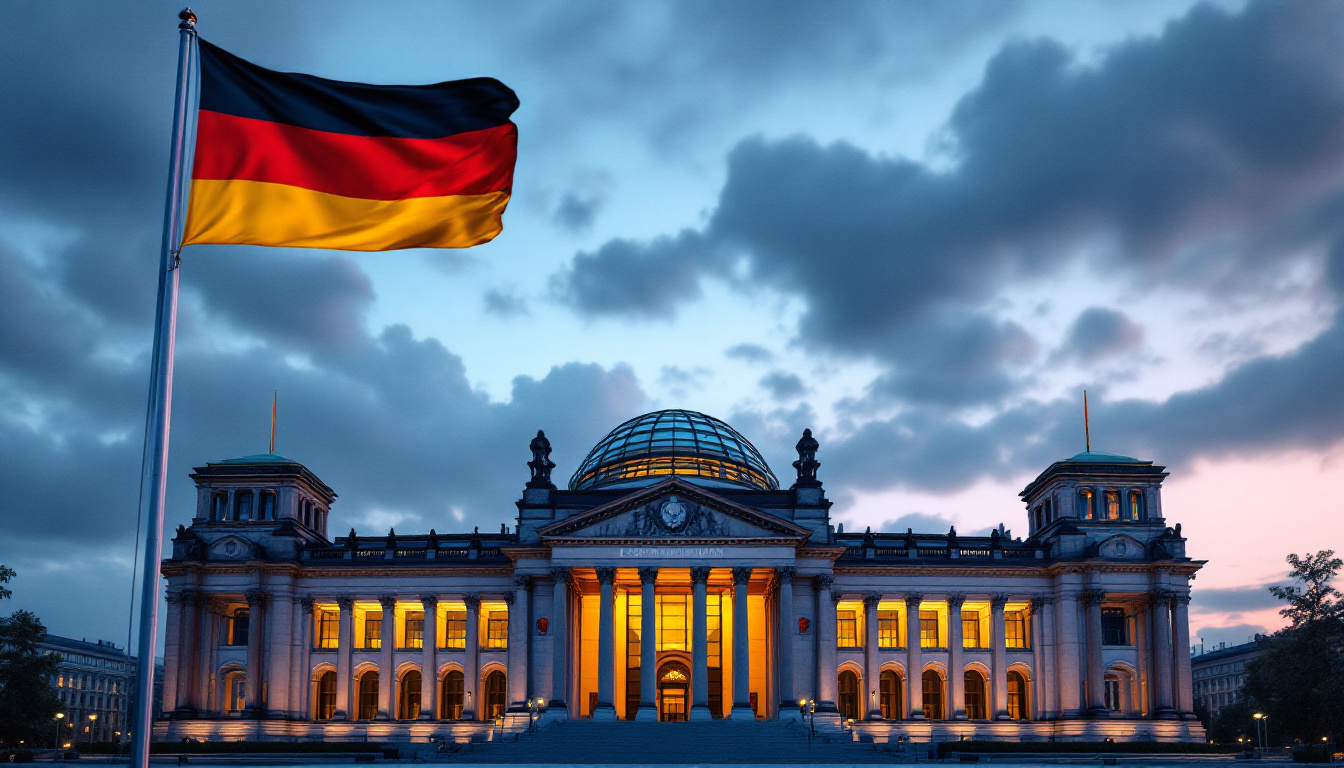
The Alternative für Deutschland party just pulled 43.8% of the vote in Saxony-Anhalt's regional election on September 7, handing the Christian Democrats their worst showing in the state's history — a 19-percentage-point collapse. Voter turnout surged from 60.3% in 2021 to 77.8% this cycle.
The silent majority, it turns out, was just waiting for a ballot.
AfD lead candidate Ulrich Siegmund will now command 39 seats in the 83-member state legislature. Chancellor Friedrich Merz, leader of the CDU, said he was "deeply shocked" by the results. The SPD, Greens, and Left party were functionally erased. The only other party to survive the carnage was BSW — the populist outfit co-led by Sahra Wagenknecht — which grabbed 5 seats and now holds kingmaker status in any potential coalition.
AfD leader Alice Weidel wasn't in a conciliatory mood. "Germany is de facto bankrupt. Germany is broke, and they are not telling you that." She added that "the AfD is not prepared to make far-reaching compromise to form a coalition" — a signal that the party plans to govern on a hardline conservative angle.
Marion Mühlberger, Senior Economist at Deutsche Bank, described the result as a seismic shift in German politics. Nomura analyst Andrzej Szczepaniak flagged the broader implications for European markets. Saxony-Anhalt contributes less than 2% of German GDP, but the political shockwave isn't about economics. It's about trajectory.
Two more state elections hit on September 20 — Berlin and Mecklenburg-Vorpommern. Polymarket currently gives the AfD 82% odds of winning Mecklenburg-Vorpommern. Berlin sits at 18%. The new parliament must convene by October 6. If Saxony-Anhalt was the warning shot, the CDU has exactly 13 days to figure out why 77.8% of voters showed up and most of them voted for the party Merz spent years calling too extreme to touch.
The establishment playbook in Europe has been identical to the one American media ran against Trump: call the populists fascists, refuse to engage with their actual platform, and assume voters will fall in line. Germany's ruling class labeled the AfD "far-right extremists" and built a firewall of coalition agreements specifically designed to keep them out of power. Voters in Saxony-Anhalt responded by giving the AfD a margin so wide that the firewall is structurally irrelevant — 39 out of 83 seats is not a protest vote that can be managed with backroom deals.
The pattern has gone global. Open borders, skyrocketing energy costs from green mandates, inflation that hollows out the middle class, and a political establishment that responds to complaints by calling voters bigots. It didn't work in 2016 in America. It didn't work in France. Caretaker government leader Sven Schulze is now presiding over the wreckage in Saxony-Anhalt, and Merz is staring at a calendar that gives him less than two weeks before the next round of results.
Weidel's line about Germany being broke isn't campaign rhetoric — it's the part the CDU can't answer. You don't get a 19-point swing because voters are confused. You get it because they've done the math and the establishment hasn't shown its work.
Merz says he's "deeply shocked." The voters weren't. They knew exactly what they were doing.

Comments are closed.