

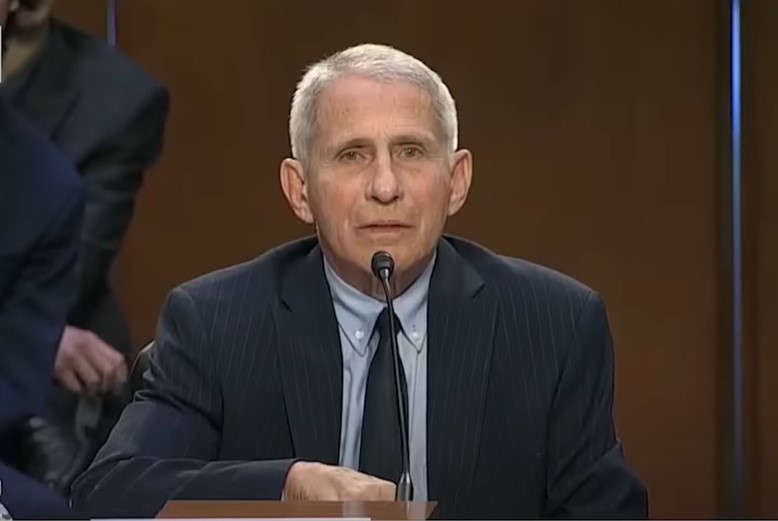
Dr. Anthony Fauci, the former Director of the National Institute of Allergy and Infectious Diseases, invoked his Fifth Amendment right against self-incrimination 111 times during a Senate hearing yesterday. Apparently, the man who spent four years lecturing us from behind a podium about "following the science" suddenly couldn't find the words.
Which is odd behavior for someone supposedly holding a presidential pardon.
Here's what makes this interesting. Former President Joe Biden issued a blanket preemptive pardon for Fauci in the final hours of his administration — signed not by Biden's hand, but by autopen. The pardon covers conduct related to Fauci's roles as NIAID director, his work on the White House Coronavirus Task Force, the White House COVID-19 Response Team, and his stint as Chief Medical Advisor. The coverage window stretches all the way back to January 1, 2014.
If the pardon is valid, Fauci is untouchable for anything he did in those roles. If it's valid.
House Oversight Committee Chairman James Comer, Republican of Kentucky, noticed the problem immediately. "If former President Biden's blanket autopen pardon is valid, then Dr. Fauci has no right to refuse to answer questions," Comer said.
A pardon eliminates criminal liability. And without criminal liability, the Fifth Amendment doesn't apply. You can't incriminate yourself for something you've already been pardoned for.
"Dr. Fauci clearly knows his autopen pardon is on legally questionable grounds and decided to protect himself," Comer said.
That's the quiet part. Fauci's own legal team apparently doesn't trust the pardon enough to let him talk freely under oath. They'd rather take the political hit of 100-plus Fifth Amendment invocations than risk him saying something a court might later hold against him.
Sen. Rand Paul released Fauci's personal diary — entries that show the former NIAID director reflecting on his pandemic-era fame and, more critically, discussing disease origins. The diary also appeared to show Fauci taking credit for influencing school closure policies. This from the same man who told the House Oversight Committee in January 2024, under oath, "I did not close the schools."
Paul's committee is now planning to vote on contempt of Congress charges against Fauci as early as next week. A contempt conviction carries a maximum fine of $100,000 and up to one year in prison.
"Americans are still reaping the consequences of Dr. Fauci's actions. Biden's pardon doesn't cover Dr. Fauci's testimony this week," Comer added. That's the key legal distinction. The pardon covers past conduct in specific roles. It doesn't cover lying to Congress in 2024 or refusing to cooperate with a lawful congressional investigation in 2026.
"Dr. Fauci's actions and lies caused irreparable harm to Americans, and he must face accountability," Comer said.
The autopen pardon itself is the story underneath the story. Biden didn't sit down and sign it. A machine did. Whether that carries the same legal weight as a hand-signed presidential pardon is a question no court has definitively resolved. And Fauci's legal team, by choosing the Fifth over the pardon, just told us which way they think that question breaks.
A man with a real pardon answers questions. A man with a piece of paper stamped by a robot pleads the Fifth 100 times and hopes nobody notices the difference.

Comments are closed.