

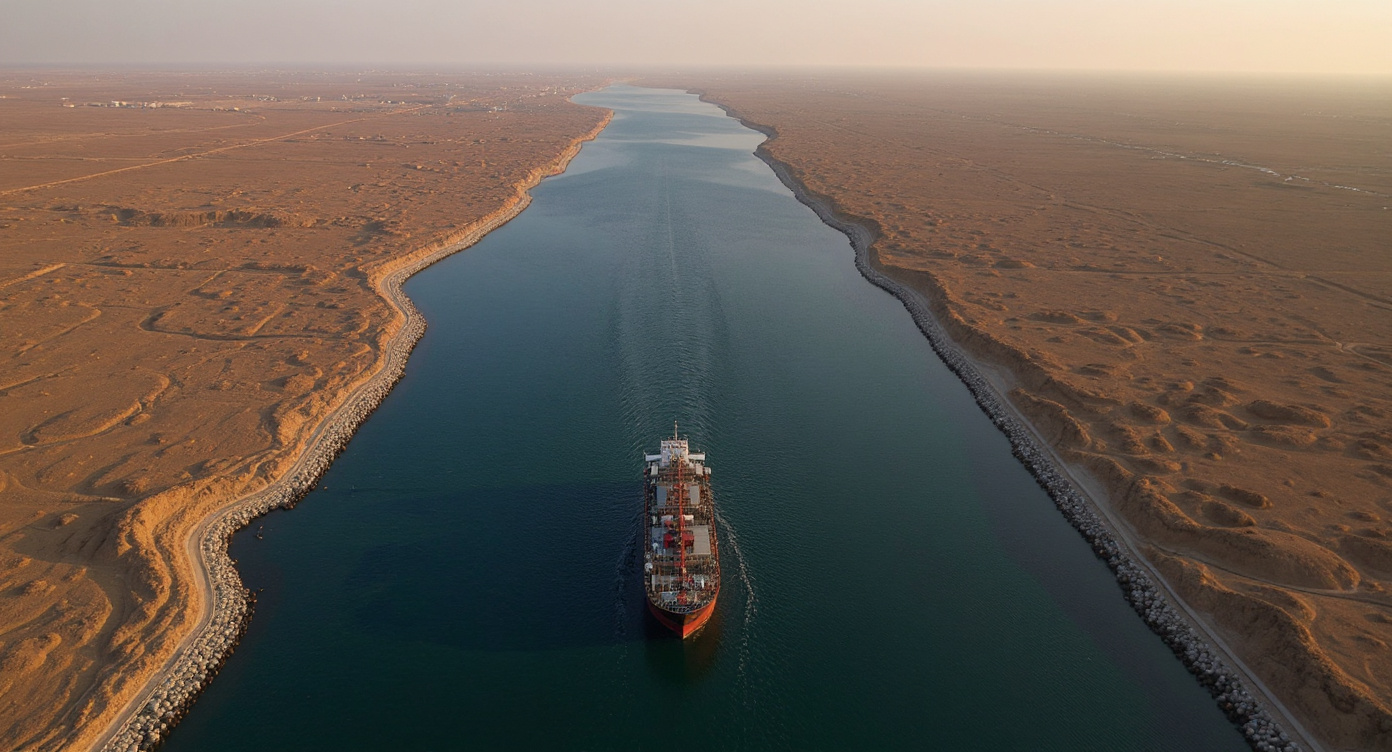
Twenty to thirty oil tankers are now sliding through the southern channel of the Strait of Hormuz every single night, carrying an average of 9 to 10 million barrels. That's roughly 50% of pre-war volume — up from the single digits just weeks ago — and every barrel that moves is one more piece of leverage Iran doesn't have anymore.
Axios, of all outlets, is the one saying it.
Barak Ravid at Axios reported that the United States has "gained the upper hand" in the battle for the world's most important oil chokepoint. The military, Ravid wrote, has been quietly undermining Iran's control of the strait and handing the advantage to President Trump. U.S. officials told Axios that only "2% of the ships that transited through the strait over the last month were hit" — meaning the IRGC is still shooting, but with the accuracy of a blindfolded man throwing darts in a hurricane.
Trump himself put it in characteristically blunt terms during a phone interview with Axios. "That sucker is open," he said. "The Iranian response is very mild. They don't want us to go back at them. That's the whole ball game. The rest doesn't matter."
The numbers tell the rest of the story. Oil prices have dropped below $90 a barrel after peaking at $120 in April. Pre-war, they hovered around $70-80. The U.S. Navy has swept more than 200 mine-like objects from the strait. Only 11 turned out to be actual mines. Few were even properly deployed.
Meanwhile, inside Iran, the economic picture is the kind of catastrophe that doesn't need editorial comment. According to Al Jazeera's own reporting, the Iranian rial has collapsed to 2 million per U.S. dollar. Tomato prices are up 71%. Chicken is up 74%. Cooking oil has surged 177%. Insulin — insulin — has skyrocketed 642%. The government minimum wage sits at roughly 166 million rials, which sounds impressive until you do the conversion: $82 a month.
The strategy driving this isn't a secret. The Trump administration, with Scott Bessent quarterbacking the economic pressure campaign, stopped chasing backroom deals with the IRGC months ago. Instead, the naval blockade that's been in place since late February is doing what blockades have done since the age of sail — slowly strangling the regime's ability to fund its own military machine. The IRGC continues firing on shipping, but U.S. and Israeli forces have been systematically degrading Iran's targeting capability, which explains that 2% hit rate.
The usual objections have surfaced. CNN ran a piece on August 20 headlined "Trump is squeezing Iran's economy and oil sales. It may still have the upper hand in Hormuz." Which is an interesting argument to make about a country whose citizens can't afford baby formula — up 95% — and whose navy can't hit 98 out of every 100 ships it shoots at.
Before the war, 130-plus vessels transited the strait daily. We're not back to that number. But the trajectory is unmistakable, and it's moving in one direction. Every tanker that passes through without incident is a data point the Iranian regime can't spin. Every barrel of oil that reaches market is economic oxygen for the global economy and a reminder that the chokepoint Iran spent decades weaponizing is slipping from its grip.
When Axios — a publication whose editorial instincts run about as conservative as a faculty lounge — publishes a headline conceding that Trump has the upper hand, the underlying reality has to be overwhelming enough that even they can't frame it away.

Comments are closed.