

Vivek Ramaswamy lost the Ohio governor's race by 7.9 percentage points — in a state Donald Trump carried by 11.2 points just two years ago. That's a 19-point swing in a state where the GOP should be measuring drapes, not explaining what went wrong.
Ron DeSantis has a theory about what happened. And he isn't being gentle about it.
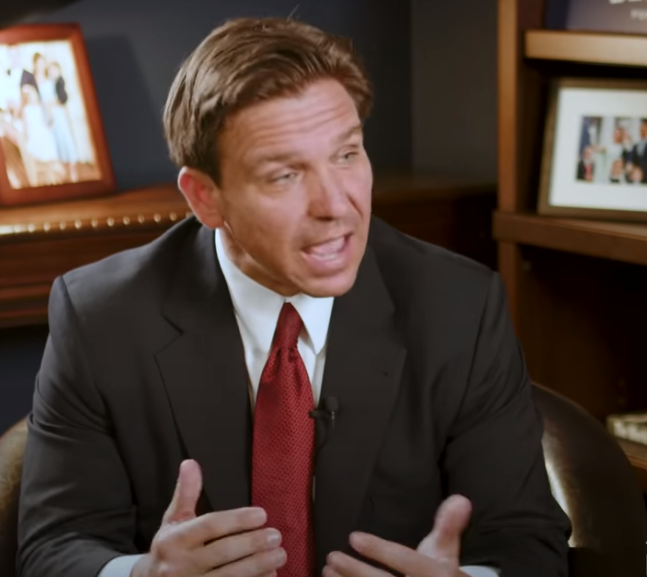
The Florida governor appeared on The Sage Steele Show and unloaded on Ramaswamy's candidacy with the kind of bluntness that usually gets focus-grouped out of Republican commentary. "I don't know why they would have pushed him to be the candidate there," DeSantis said. "Oh, my mom's from Youngstown. Ohio is a working class state, very blue collar. You know Vivek, he's like a tech guy."
Then came the line that landed hardest: "He wants to bring in foreign workers on visas. That is not the type of person that's going to sell."
Ramaswamy, the biotech entrepreneur who founded Roivant Sciences and co-founded anti-ESG investment firm Strive Asset Management, ran as a populist outsider. The problem is that his company's hiring records tell a different story. Roivant Sciences had 29 H-1B visa applications approved between 2018 and 2023.
And Strive Asset Management? The company Ramaswamy pitched as a heartland alternative to woke Wall Street moved its headquarters from Columbus to Dallas in 2025. The populist champion of Ohio relocated his own company out of the state before asking Ohioans for their vote.
DeSantis framed the loss as a candidate problem, not a party problem. "I think we would have done better in Ohio had we had a candidate that was more representative or more in tune with the interests of kind of these blue collar people that make the backbone of Ohio," he said. "You got to meet the voters where they are."
The numbers back him up. Jon Husted, running for the other statewide seat, lost by 4.9 points — still a loss, but nearly three points closer than Ramaswamy managed. Same state, same election night, same headwinds. The variable was the candidate.
This is actually the larger story the Ohio result tells. The Republican Party's working-class coalition isn't theoretical anymore — it's the whole ballgame in the Midwest. Trump proved it. JD Vance, who knew Ramaswamy from Yale Law School, proved it from the other direction — a guy who actually wrote the book on Appalachian working-class identity. The coalition is real, but it demands candidates who live it, not candidates who studied it on a whiteboard at a biotech startup.
DeSantis, to his credit, wasn't scoring cheap points. He was diagnosing something the party needs to hear before 2028 recruiting starts in earnest. "The only way that I would run for any office is if you can actually deliver big results," he said. Translation: the resume has to match the rhetoric.
Democrat Amy Acton won that governor's seat. In Ohio. A state Trump dominated. She didn't win because Ohio turned blue overnight. She won because the GOP handed blue-collar voters a billionaire biotech founder who outsources labor and moves companies to Texas, then asked them to believe he was one of them.

Comments are closed.