

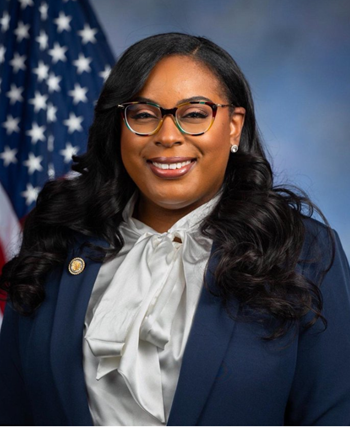
Rep. LaMonica McIver (D-NJ) told the Third Circuit Court of Appeals that she couldn't be prosecuted for allegedly slamming her forearm into federal agents because she's a congresswoman. On August 26, the court told her that's not how any of this works.
Two felony counts and a misdemeanor. All still on the table.
The whole mess started in May 2025, when McIver and a group of lawmakers showed up at Delaney Hall, an ICE detention facility in Newark, New Jersey. What was supposed to be some kind of oversight visit turned into a physical confrontation. According to the federal indictment returned in June 2025, McIver "forcibly impeded and interfered with federal law enforcement officers" — pushing past agents, grabbing one, and using her forearms to "forcibly strike" another. The three-count indictment carries a maximum of 17 years in prison if she's convicted on all charges.
McIver pleaded not guilty and immediately played the victim card. "The way we were treated at Delaney Hall is almost unbelievable," she said at the time. She then mounted a legal defense built on legislative immunity — the idea that members of Congress can't be hauled into court for actions taken as part of their official duties.
The Third Circuit wasn't buying it. The court's ruling was about as blunt as federal appellate language gets: "The acts of pushing past and forcibly striking someone are unambiguously non-legislative." Two of the three charges will proceed to trial. The court sent the third count back to a lower court for further review — not a dismissal, just a procedural detour.
McIver responded by saying the court "got it wrong" and that she is "exploring every possible option." She also released a statement arguing that "elected representatives must be authorized to conduct oversight of the executive branch without fear of retaliation." Which is a creative way to describe what prosecutors say was an assault on two federal officers.
The immunity play was always a stretch. Legislative immunity — rooted in the Speech or Debate Clause — protects things like floor votes, committee hearings, and legislative reports. It has never covered physically striking law enforcement personnel during a facility visit. Asking the courts to extend it that far isn't a legal argument. It's a PR strategy dressed in a brief.
This is part of a pattern we've seen since ICE enforcement ramped back up. Elected officials show up at detention facilities, manufacture a confrontation, then run to the cameras claiming they were "just doing their jobs." The difference here is that McIver's confrontation crossed a line that cameras and press releases can't erase. A grand jury saw the evidence and returned an indictment. An appeals court reviewed the immunity claim and rejected it.
She entered Delaney Hall looking for a moment. She got a federal case instead.

Comments are closed.