

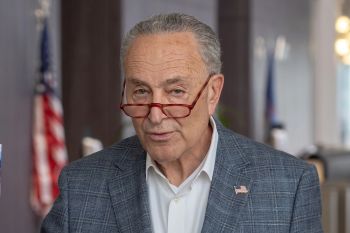
Senator Chuck Schumer had a plan to block $810 million in Trump administration spending cuts. Senator Ron Johnson had a single word: no.
The Senate Minority Leader's elaborate procedural strategy collapsed on the chamber floor before it ever got off the ground, killed by an objection from the Wisconsin Republican who chairs the Budget Committee.
Here's what happened. President Trump invoked a pocket rescission — a rarely used presidential power to cancel congressionally appropriated funds — targeting $810 million earmarked for refugee assistance, migrant education, and diversity initiatives. The administration's reasoning was straightforward: illegal border crossings have dropped sharply, so the money allocated to manage the old crisis isn't needed anymore. That money doesn't vanish into a slush fund. It just doesn't get spent.
Schumer's Democratic allies, Senators Jeff Merkley of Oregon and Patty Murray of Washington, attempted to pass a bill through unanimous consent to block the rescission. Merkley characterized Trump's move as akin to "a line-item veto" — a framing designed to make a routine budget tool sound unconstitutional. Johnson objected. Under the pocket rescission's 90-day clock, the funds expired Wednesday. No House vote. No rescue. Done.
Johnson told reporters he'd do "whatever it takes" to reduce federal spending. "Personally, I wish it was a lot larger," he said of the $810 million cut. "That money doesn't have to be spent, and it shouldn't be spent."
Merkley's line-item-veto comparison sounds alarming until you remember what a line-item veto actually is: a president striking specific items from a signed spending bill. A pocket rescission doesn't strike anything. It sends a request to Congress to rescind funds, and if Congress doesn't act within 90 days, the funds lapse. Congress had 90 days. Congress chose not to act. The mechanism worked exactly as designed.
The pocket rescission hasn't been a regular feature of presidential budgeting for decades. Trump dusted it off because the appropriations process has become a rubber stamp — Congress approves massive spending packages, and nobody revisits whether the money is still needed once conditions change. Border crossings dropped. The programs funded to handle the surge didn't drop with them. Trump pointed at the gap. Johnson held the door open.

Comments are closed.