

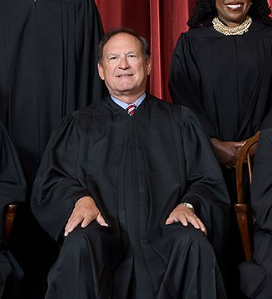
Justice Samuel A. Alito Jr. sat for an interview with Bloomberg News in early October and delivered six words that just detonated the Democratic Party's entire post-election Supreme Court strategy: "I intend to stick around through this term."
The current term runs nine months. The new Senate doesn't.
The 76-year-old justice's statement landed like a brick through the window of every progressive legal organization that spent the last six months gaming out how a Democratic Senate majority could pressure conservative justices off the bench. The theory was simple — win the Senate, create political conditions where Alito or 78-year-old Justice Clarence Thomas would feel cornered into retirement, then refuse to confirm any Trump replacement. Tuesday night's results gave Democrats the Senate. Alito's response took about 24 hours.
The math Democrats were counting on, according to Governor Ron DeSantis, who posted on X the night of the election: "Assuming Republicans lose the seats where prediction markets have the Democrats at 90+% to win, that would produce 55 Democrat Senate seats." Fifty-five seats. Enough to block any Supreme Court nominee. Enough, in theory, to make the confirmation process so hostile that a sitting justice might decide the fight isn't worth it.
That theory required Alito and Thomas to cooperate. Neither has shown any interest in doing so.
Michael Dorf, a professor at Cornell Law School, explained the dynamic to reporters with unusual candor. Justices sometimes factor political conditions into retirement timing, he said, but "they do not like to broadcast that they do so." Then he delivered the line that should be framed on every Federalist Society wall in America: "Absent an acute health crisis, a decision to retire in the next several months would appear, and would in fact be, so nakedly political that I doubt Justice Alito or Thomas would take it."
Read that again through the lens of what Democrats were hoping for. Their entire strategy depended on justices making a decision that even a liberal Cornell law professor says would be too transparently political for any serious jurist to consider. The plan was dead before Tuesday's votes were counted. Alito just made sure everyone knew it.
Reuters reportedly reached out to both justices for comment. Thomas hasn't made a public statement, but the silence carries its own message. Nobody who has watched Clarence Thomas operate for three decades on the Court expects him to fold because Chuck Schumer has a bigger majority.
The Ruth Bader Ginsburg comparison looms over all of this, though not the way progressives want. Ginsburg refused to retire during Obama's presidency when Democrats held the Senate, gambled that Hillary Clinton would win in 2016, and lost. Her seat went to a conservative. The cautionary tale isn't about age — it's about what happens when justices make political calculations instead of legal ones. Alito appears to have learned that lesson, just not the version Democrats were teaching.
The New York Times had already been floating retirement speculation for weeks before the election. The Bloomberg interview shut it down. The midterm results were supposed to restart it. Instead, they produced a 76-year-old justice who looked at 55 Democratic senators and a media apparatus demanding his resignation and said the only thing worth saying.
Nine months is a long time. Alito plans to be there for every one of them.

Comments are closed.